

The Invisible Patients: Rewriting the Story of Women in Clinical Science. Part 1: The Legacy of Neglect
How Science Failed Women and How It's Changing
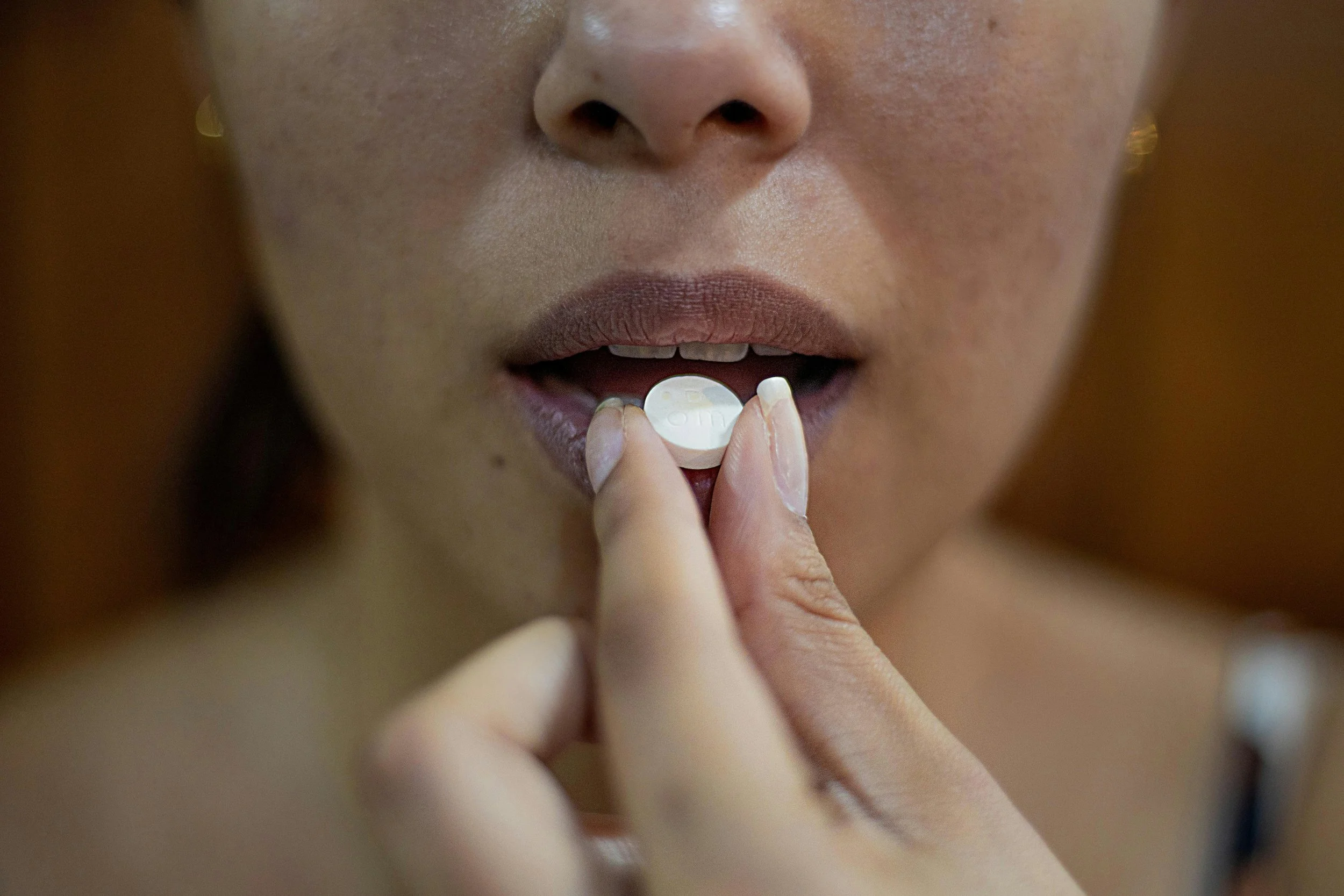
From the desk of Colleen Quinn I approach this topic not as a medical doctor or licensed practitioner, but as a researcher and strategist deeply invested in the intersection of clinical proof and human health. This piece represents my analysis of the current landscape and is intended to provoke thought, not to provide medical diagnosis or treatment.
The Legacy of Neglect
For decades, women's bodies have been treated as biological footnotes in medical research - mysterious variations on a "standard" male template. This oversight hasn't just been an academic inconvenience; it has cost lives, delayed diagnoses, and perpetuated a healthcare system fundamentally misaligned with the needs of half the population. As science journalist Angela Saini observed, "Women are so grossly underrepresented in modern [science that] science has failed to rid us of the gender stereotypes and dangerous myths we've been laboring under for centuries."
Today, we stand at a pivotal moment. The landscape of clinical research in women's health is transforming, driven by advocacy, policy reform, and a growing recognition that medicine cannot be universal if it ignores biological sex and gender as critical variables. This is the story of where we've been and the promising progress ahead.
The Historical Exclusion: A Pattern of Oversight
The systematic exclusion of women from clinical trials has deep roots. Throughout much of the 20th century research protocols routinely excluded women of childbearing potential, ostensibly to protect potential fetuses from experimental harm. The thalidomide tragedy of the 1950s and 60s, where a drug prescribed for morning sickness caused severe birth defects, reinforced this protective stance. While well-intentioned, this approach created a paradox: drugs were being prescribed to women based on research conducted almost exclusively in men.
The consequences were profound. A 2001 report by the U.S. Government Accountability Office found that eight out of ten prescription drugs withdrawn from the U.S. market between 1997 and 2001 posed greater health risks for women than men. These were not minor medications, they included widely prescribed drugs for conditions affecting millions of women.
“Women are so grossly underrepresented in modern [science that] science has failed to rid us of the gender stereotypes and dangerous myths we’ve been laboring under for centuries.”
The male bias extended beyond drug trials. Cardiovascular research provides a stark example. For years, heart disease was studied predominantly in men, despite being the leading cause of death for women in many developed nations. The "classic" symptoms of heart attack - crushing chest pain radiating down the left arm were derived from male patients. Women's symptoms, which often present differently - nausea, fatigue, jaw pain, shortness of breath, were frequently dismissed or misdiagnosed, contributing to worse outcomes.
Dr. Janine Austin Clayton, Associate Director for Research on Women's Health at the National Institutes of Health (NIH), has articulated this problem clearly: "Historically, the male body has been the default in biomedical research. This has resulted in a healthcare system where women's symptoms are often dismissed, misdiagnosed, or under treated - not because physicians don't care, but because the evidence base guiding their decisions was built on research that didn't include enough women."
The Biological Reality: Why Sex Matters in Research
The exclusion of women from research was not just unfair, it was scientifically flawed. Biological sex influences nearly every aspect of human physiology, from drug metabolism to immune response to pain perception. Women metabolize medications differently than men due to differences in body composition, hormonal fluctuations, enzyme activity, and organ function. Ignoring these differences does not simplify research, it produces incomplete and potentially dangerous results.
“Studies indicate that women experience chronic pain conditions more frequently than men and may respond differently to pain medications. Yet pain research has historically been conducted primarily in male subjects, even male mice.”
Hormonal variations throughout the menstrual cycle affect drug efficacy and side effects. Women have, on average, a slower gastric emptying time, different ratios of body fat to muscle and variations in liver enzyme activity - all factors that influence how medications work in the body. For example the cytochrome P450 enzyme system, which metabolizes many common drugs, shows significant sex-based differences in activity levels.
Pain research reveals similar disparities. Studies indicate that women experience chronic pain conditions more frequently than men and may respond differently to pain medications. Yet pain research has historically been conducted primarily in male subjects, even male mice. A 2014 analysis published in the journal Pain found that animal pain studies used male subjects exclusively 79% of the time, despite chronic pain conditions disproportionately affecting women.
Autoimmune diseases, which affect approximately 80% women, represent another critical area where the research gap has real consequences. Conditions like lupus, multiple sclerosis, rheumatoid arthritis, and Sjögren's syndrome predominantly affect women, yet research into these conditions has been chronically underfunded and understudied relative to their disease burden.

The Turning Point: Policy and Advocacy Drive Change
The tide began to turn in the 1990s, driven by persistent advocacy from women's health activists, researchers, and policymakers who demanded better. The NIH Revitalization Act of 1993 marked a watershed moment in U.S. research policy. The legislation mandated the inclusion of women and minorities in NIH-funded clinical research and required that trials be designed to allow for analysis of sex-based differences in study outcomes.
The establishment of the NIH Office of Research on Women's Health (ORWH) in 1990 provided institutional support for this shift. The office's mission was to ensure that women's health research is part of the scientific framework, not an afterthought, representing a fundamental reconceptualization of how biomedical research should be conducted.
“A 2019 analysis in JAMA Network Open examining cardiovascular clinical trials found that female enrollment had increased from 27% in the 1970s to 38% by 2010-2017 - progress, though still short of proportional representation given that heart disease affects women and men nearly equally.”
Internationally, similar movements gained momentum. The European Medicines Agency began requiring sex-specific data in clinical trial applications. In 2016, the NIH announced a policy requiring researchers to consider sex as a biological variable (SABV) in the design and analysis of vertebrate animal and human studies. This wasn't merely about increasing female representation, it was about recognizing that robust, reproducible science requires accounting for biological variables that affect outcomes.
These policy changes have begun to shift the research landscape. A 2019 analysis in JAMA Network Open examining cardiovascular clinical trials found that female enrollment had increased from 27% in the 1970s to 38% by 2010-2017 - progress, though still short of proportional representation given that heart disease affects women and men nearly equally.
Sources
Saini, A. (2017). Inferior: How Science Got Women Wrong and the New Research That's Rewriting the Story. Beacon Press.
U.S. Government Accountability Office. (2001). "Drug Safety: Most Drugs Withdrawn in Recent Years Had Greater Health Risks for Women." GAO-01-286R.
National Institutes of Health, Office of Research on Women's Health. "Sex as a Biological Variable." https://orwh.od.nih.gov/sex-gender/nih-policy-sex-biological-variable
Mogil, J. S., & Bailey, A. L. (2010). "Sex and gender differences in pain and analgesia." Progress in Brain Research, 186, 141-157.
Zucker, I., & Prendergast, B. J. (2020). "Sex differences in pharmacokinetics predict adverse drug reactions in women." Biology of Sex Differences, 11(1), 32.
Scott, P. E., Unger, E. F., Jenkins, M. R., et al. (2018). "Participation of Women in Clinical Trials Supporting FDA Approval of Cardiovascular Drugs." Journal of the American College of Cardiology, 71(18), 1960-1969.
Kim, A. M., Tingen, C. M., & Woodruff, T. K. (2010). "Sex bias in trials and treatment must end." Nature, 465(7299), 688-689.
Beery, A. K., & Zucker, I. (2011). "Sex bias in neuroscience and biomedical research." Neuroscience & Biobehavioral Reviews, 35(3), 565-572.
Petersen, E. E., Davis, N. L., Goodman, D., et al. (2019). "Vital Signs: Pregnancy-Related Deaths, United States, 2011–2015, and Strategies for Prevention, 13 States, 2013–2017." Morbidity and Mortality Weekly Report, 68(18), 423-429.
Labots, G., Jones, A., de Visser, S. J., et al. (2018). "Gender differences in clinical registration trials: is there a real problem?" British Journal of Clinical Pharmacology, 84(4), 700-707.